


In the Recommendations for Formulating Guangzhou's 15th Five-Year Plan, the goal of building a "Air-and-Space Strong City" is proposed for the first time. During Guangzhou's two sessions, the "low-altitude economy" emerged as a key topic of discussion among deputies and committee members.
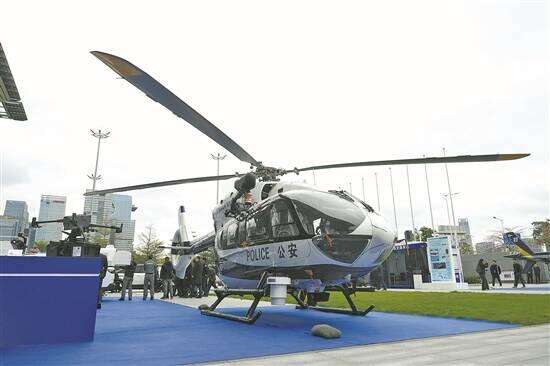
The "Guangzhou Plan for Accelerating the Construction of a Strong Advanced Manufacturing City (2024-2035)" was recently released. The goal is to build a globally influential "Sky City" and a new national hub for the commercial space flight industry by 2035, fostering a number of leading enterprises in intelligent aerial vehicles and commercial spaceflight.
Li Zhijian, a deputy to the Guangzhou Municipal People's Congress, noted that the low-altitude economy is opening up new dimensions of urban space, making Guangzhou's airspace increasingly multi-layered. From drone logistics in Zhujiang New Town to passenger-carrying aircraft approaching commercial deployment, strategic emerging industries have become a new engine of economic growth and are expected to form a distinctive hallmark that sets Guangzhou apart from other cities.
Guangzhou is now home to four general and helicopter airports: Conghua Liangkou Airport, Conghua General Aviation Airport, Zengcheng Sanjiang Airport and Zengcheng General Aviation Airport. Together with an integrated network of "multiple takeoff and landing sites plus a low-altitude intelligent network and meteorological support system," coverage has been extended to tourist attractions, industrial zones and logistics nodes.
Addressing the governance needs of a megacity, Chen Qishu, a member of the Guangzhou Municipal Committee of the Chinese People's Political Consultative Conference and the Deputy Director of the Guangzhou Municipal Audit Bureau, proposed establishing a unified low-altitude public service inspection system under a "single-network, centralized flight operations" model. He also suggested using the "Guangzhou Eagle Eye", a low-altitude flight service platform, as a benchmark to standardize hardware and software and develop integrated drone hub systems. This model could not only be applied to inspections by multiple departments such as urban management, environmental protection and transport, but also play an irreplaceable role in emergency command, rescue and disaster relief, marking a critical leap toward the modernization of urban governance capabilities.
Beyond urban governance, the low-altitude economy applications are set to reshape the regional connectivity and mobility patterns of the Guangdong-Hong Kong-Macao Greater Bay Area and transform cultural and tourism experiences, bringing multi-layered transport networks from science fiction into reality.
The Guangzhou Municipal Committee of the Chinese Peasants and Workers Democratic Party (CPWDP) has outlined a clear roadmap of application scenarios. It proposes building efficient low-altitude passenger transport networks in densely populated areas, promoting seamless connections among major hubs, business districts and tourist attractions, and integrating with intelligent connected vehicles. At the same time, tourism and sightseeing are identified as early commercialization scenarios, with plans to establish an urban low-altitude demonstration and experience center at Haixinsha Island and design multi-tiered aerial sightseeing routes based on flight camps.
In its proposal, the Guangzhou Municipal Committee of the Revolutionary Committee of the Chinese Kuomintang(RCCK) noted that the high-quality airspace and ecological resources in areas such as Conghua and Zengcheng are well suited for "aerial cultural and tourism" projects, including low-altitude sightseeing, study tours and aviation sports. These initiatives would promote shared use of airspace around Nankun Mountain and industrial integration, supporting the development of the low-altitude economy in the Nankun Mountain-Luofu Mountain Pioneer Area.
Source:PEARL
向天空要生产力!广州人大代表委员建言献策
广州“十五五”规划建议中,首次提出建设“空天强市”。2026年广州市两会期间,“低空经济”成为代表委员们热议的焦点。
《广州市加快建设先进制造业强市规划(2024—2035年)》近日印发。目标是到2035年,打造具有全球影响力的“天空之城”、中国商业航天新一极,涌现一批智能航空器、商业航天领域的骨干企业。
广州市人大代表李志坚表示,低空经济所打开的城市空间维度,正在使广州的天空变得“立体”。从珠江新城的无人机物流到即将商业化的载人飞行器,战略性新兴产业已成为拉动经济增长的新引擎,并有望成为广州区别于其他城市的独特标识。
如今,广州拥有4座通用/直升机场(从化良口机场、从化通用机场、增城三江机场、增城通用机场),“N个起降点+低空智联网+气象保障系统”覆盖景区、产区、物流节点。
针对超大城市治理需求,广州市政协委员、市审计局副局长陈启书建议,构建低空政务巡检“一网统飞”体系,并以“广州鹰眼”为范本,统一硬件与软件标准,建设集成化的无人机机场系统。“一网统飞”体系不仅能应用于城管、环保、交通等多部门巡查,更能在应急指挥、抢险救援中发挥不可替代的作用,是城市治理能力现代化的关键一跃。
除了城市治理,“低空+”应用更将重塑大湾区时空格局与文旅体验,让立体交通网络从科幻走进现实。
农工党广州市委员会描绘了清晰的场景路线图:在人口密集区打造高效的低空客运服务网,推动重要枢纽、商务区、景区间的联程接驳,并与智能网联汽车融合发展。同时,将旅游观光作为早期商业化场景,在海心沙打造城市低空展示体验中心,依托飞行营地设计多层次航空旅游线路。
民革广州市委员会在提案中指出,从化、增城等地的优质空域与生态资源,非常适合开展低空观光、研学、航空运动等“空中文旅”项目,以此推动南昆山空域共享与产业融合,助力环南昆山—罗浮山引领区低空经济发展。
策划|刘云
统筹|柳卓楠 徐振天
文|记者 卢佳圳
翻译 | 曾敏
-
Gesang Flowers Bloom at Yunan's Dahe National Wetland Park in YunfuA soft sea of pink and purple blossoms is beautifully set against the brown bald cypress trees nearby, creating a picturesque and vibrant winter landscape.2026-01-19 21:40:06
-
One Couplet, Two Cities, Countless Homes BlessedOn January 16, within the classic halls of the Tongren Museum in Guizhou Province, the soft, lingering sound of brushstrokes gliding across red paper filled the air.2026-01-19 21:40:06
-
 DataTalk|China’s GDP reached RMB 140.19 trillion in 2025!Through this set of data visuals, we can clearly see the steady and improving momentum of China’s economy.2026-01-19 19:59:25
 -
 CEO of Egyptian Tourism Authority promotes Grand Egyptian MuseumIn January 2026, the Egyptian Tourism Authority launched a three-city roadshow in China, covering key cities of Beijing, Shanghai, and Guangzhou. During the Guangzhou event on January 16th, the Egyptian delegation held multiple discussions with representatives from China's tourism industry, the media, and partners.2026-01-18 21:34:23