


In 2024, the Guangdong-Hong Kong-Macao Greater Bay Area (GBA) recorded a GDP of 14.79 trillion yuan, on par with the Tokyo Bay Area and surpassing the New York Metropolitan Area and the San Francisco Bay Area. This vast economic output has driven strong demand for premium air services. The region's seven airports handled more than 200 million passengers this year. In terms of cargo, three hub airports in Hong Kong, Guangzhou and Shenzhen together processed 9.2 million tons in 2024, accounting for 7.2% of the global total.
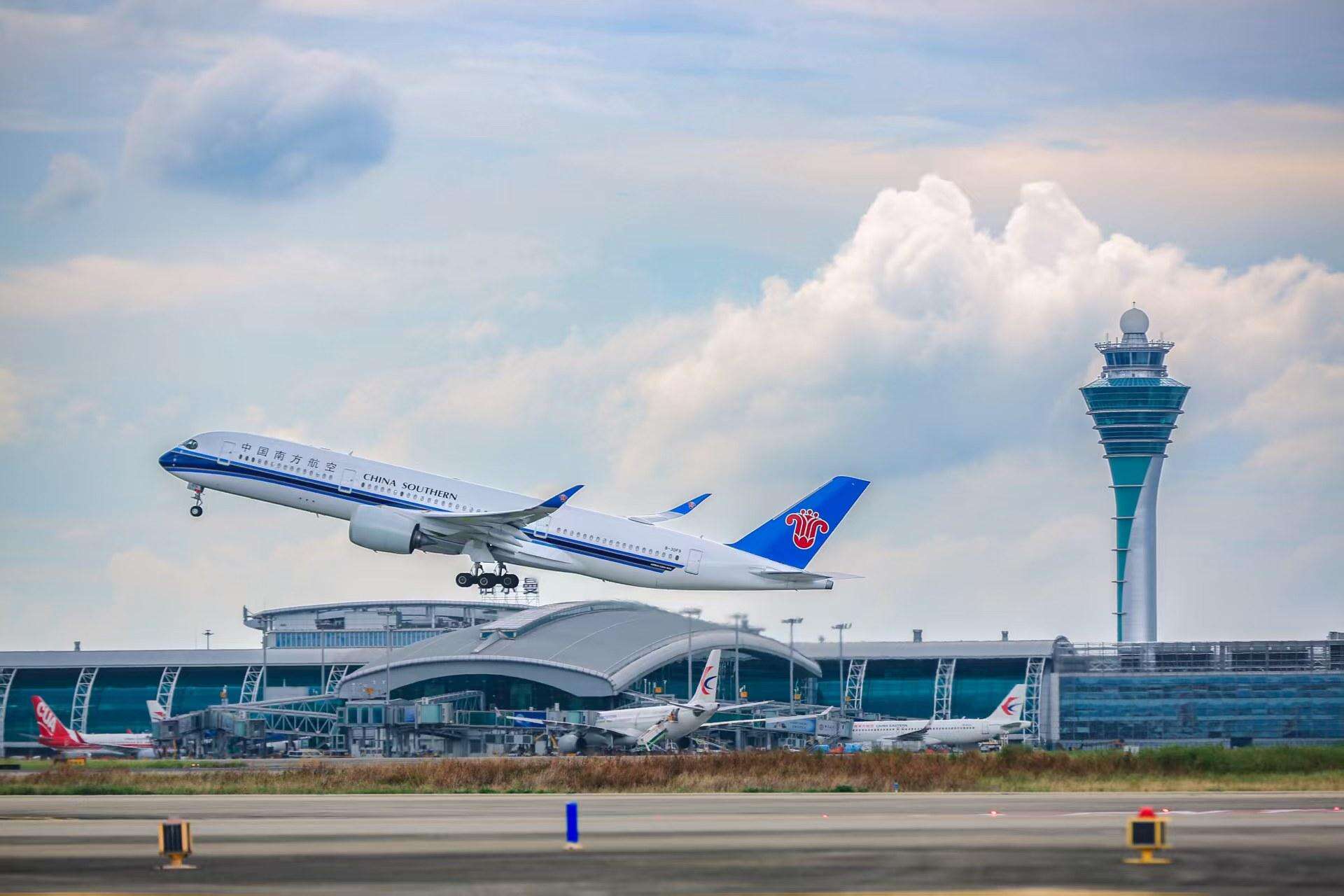
Guangzhou Baiyun International Airport is evolving from a "southern gateway" into an "intercontinental hub" connecting Southeast Asia, Oceania and Africa. It has handled 76.52 million passengers so far this year, already surpassing last year's total. Shenzhen Bao'an International Airport's cargo throughput is expected to exceed 2 million tons for the first time, while Hong Kong International Airport has brought its three-runway system into service on schedule and within budget, boosting its annual passenger and cargo handling capacity by 50%. Together, these three engines underpin the GBA's promise of "4 hours to Southeast Asia and 12 hours to the world."
For the GBA, a world-class airport cluster serves as a"supply-chain reshaper." Shenzhen Airport's cargo throughput is approaching 2 million tons, Guangzhou Airport handles around 2.38 million tons, and Hong Kong Airport handles nearly 5 million tons. Together, they support a new industrial model defined by "global R&D, manufacturing in the GBA, and just-in-time delivery."
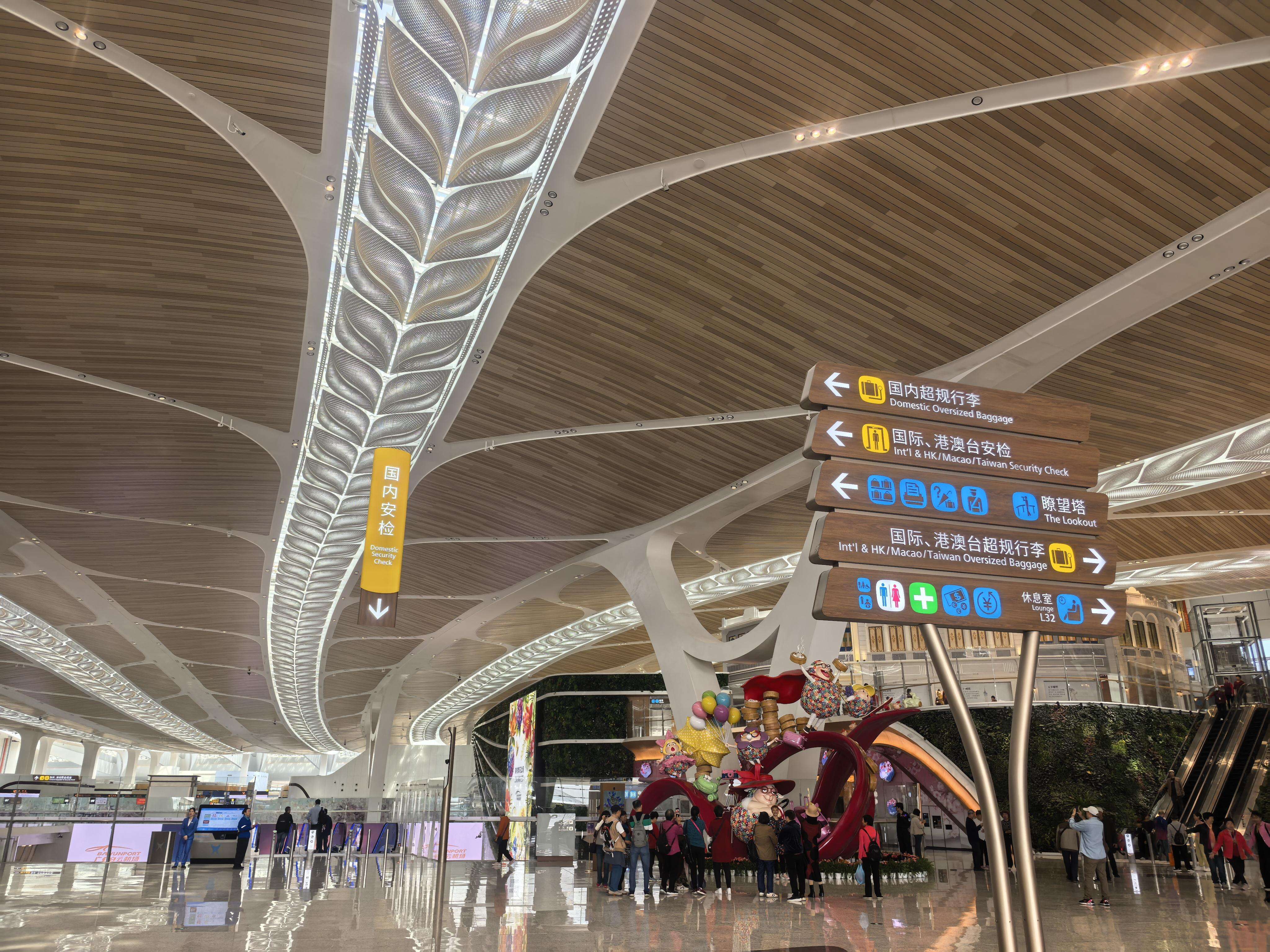
It is also a catalyst for aerotropolis development. The open-air observation deck at Guangzhou Airport's Terminal 3 has become an online sensation, drawing 100,000 visitors each month. The Airport Authority Hong Kong presented the Airport City development blueprint under the new brand "SKYTOPIA", integrating commercial events, pop culture, art trading and entertainment and leisure. This has reinforced Hong Kong Airport's role as a major driver of the city's economic growth.
It is furthermore an "accelerator for integration." Guangzhou Airport plans to connect with six high-speed railway lines, five intercity railways and two metro lines. The Shenzhen-Daya Bay Intercity Rail, linking directly to Shenzhen Airport, is expected to open next year. Hong Kong Airport is enhancing its multimodal transport network through speedy ferry services and linkages with the Hong Kong-Zhuhai-Macao Bridge, improving access to western GBA cities.
全球坐标下,大湾区重构空中枢纽版图
2024年,大湾区14.79万亿元的经济总量,比肩东京湾区,超越纽约与旧金山湾区。庞大的经济体量催生了巨量的高端航空需求:大湾区七座机场年旅客吞吐量超2亿人次。货运方面,2024年,香港、广州、深圳三大机场货运总量达920万吨,占全球总量的7.2%。
当前,广州白云机场正从“南方门户”升级为面向东南亚、大洋洲、非洲的“洲际辐射中心”,今年累计接送旅客达到7652万人次,已超去年全年;深圳机场今年货邮吞吐量预计首破200万吨;香港机场三跑道系统按时按预算启用,机场年客货运处理能力提升50%。三核驱动,共同支撑起大湾区“4小时覆盖东南亚,12小时通达全球”的时空承诺。
对于粤港澳大湾区而言,世界级机场群是“供应链重构者”。深圳机场货邮量冲向200万吨,白云机场约238万吨货量,香港机场近500万吨的货运量,支撑了大湾区“全球研发、湾区制造、即时交付”的产业新范式。
其次,它是“临空经济催化器”。白云机场T3的观景平台成为网红地标,月吸引10万市民游客打卡;香港机管局推出“机场城市”发展蓝图新品牌“SKYTOPIA”,集商业活动、流行文化、艺术交易及娱乐消闲于一身,令香港国际机场成为香港经济发展的重要引擎之一。
它更是“一体化加速器”。白云机场规划引入6高铁、5城际、2地铁;深圳机场接入的深大城际预计明年通车;香港机场则通过快船与港珠澳大桥联通西岸,持续完善“多式联运”网络。
文 | 记者 陈泽云 詹淑真
图 | 机场供图
翻译|曾敏
审校|林佳岱
-
 Poster丨The 19th South China (Guangzhou) Pet Carnival Kicks Off at SCAU’s “Zootopia”!2025-12-08 21:06:06
 -
The 19th South China (Guangzhou) Pet Carnival Kicks Off at SCAU’s “Zootopia”!The annual gathering of furry friends is back! On December 6, the 19th South China (Guangzhou) Pet Carnival was held at South China Agricultural University.2025-12-08 20:47:09
-
Shawan Ancient Town Hosts Lion Dance Showdown Across Guangdong, Hong Kong & MacauOn December 6, the 2025 Guangdong-Hong Kong-Macao Traditional Lion Dance Invitational Tournament officially kicked off in Shawan Ancient Town, Panyu.2025-12-08 20:46:49
-
 Lingnan: Beauty Beyond Borders | Zuobu Village, Nanlang Subdistrict, Zhongshan: Harmonies of Rice Waves amid New Rhythms in an Old VillageZuobu Village in Nanlang Sub district, Zhongshan, is evolving from a “Instagram-worthy spot” into a cultural haven, where visitors can enjoy immersive experiences with local heritage.2025-12-08 20:46:35