


2025 was a banner year for China's technology. From the world-shaking large-scale AI model DeepSeek to the robotics breakthroughs by Unitree Robotics and XPeng Robotics, from the successful 450 km/h trial runs of the CR450 high-speed train prototype to the Tianwen-2 mission opening a new chapter in asteroid exploration, China's scientific progress continued to push the boundaries of human knowledge.
What tech highlights can we expect in China in 2026? Breakthroughs are anticipated in four key areas as follows.
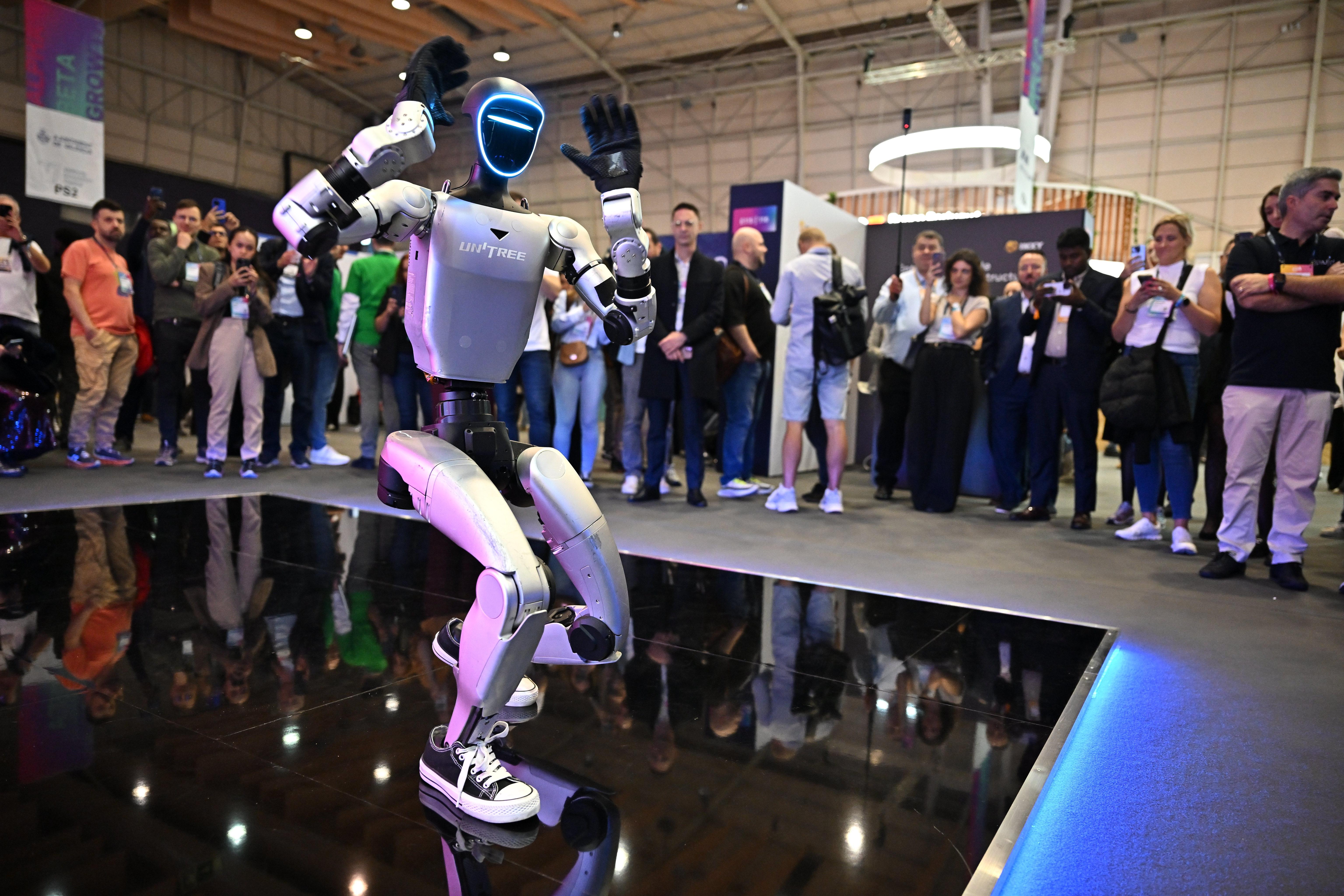
Space: Continuing preparations for a crewed moon landing
In 2026, China's space program will continue to shoot for the stars.
In low-Earth orbit, the China Space Station (CSS), known as Tiangong, will enter its seventh year of regular operations. Crewed spacecraft Shenzhou-23 and Shenzhou-24 are expected to rotate missions aboard the station. Notably, the Shenzhou-23 crew will undertake China's first long-duration residency experiment in orbit with one astronaut for more than a year, which will be a milestone in the country's crewed spaceflight history.
As for lunar exploration, China plans to launch the Chang'e 7 lunar probe. One of its core objectives is to land near the Moon's South Pole to survey the environment and resources, especially water. This will have a far-reaching influence on future human survival and development on the Moon. Meanwhile, test flights of the Long March 10 carrier rocket and the new generation of crewed spaceship "Mengzhou" will continue. If successful, these developments will lay a solid foundation for China's future crewed lunar mission.

AI: "AI agents" in every household
In early 2025, China's general-purpose AI model DeepSeek burst onto the scene. In 2026, the country's AI industry is expected to sustain high-growth momentum, shifting its focus from simple model building to deeper industrial integration and real-world application.
China's share of total computility dedicated to intelligent workloads is expected to exceed 35% in 2026, with domestic chips reaching large-scale application in select scenarios and a hardware-software co-design ecosystem taking shape.
Both "software agents" and "hardware agents" are expected to see rapid adoption. Software agents that can autonomously operate computers and perform complex tasks will be applied across finance, healthcare, education, and more. As for hardware agents, terminal products such as interactive robots and AI earbuds will accelerate commercialization and open new consumer markets. IDC predicts that by 2026, 50% of data teams of China's top 500 enterprises will use AI agents for data preparation and analysis.
The application of AI will also rewire the end-to-end intelligent reconstruction of traditional industries. In manufacturing, smart factories will grow in both number and sophistication, driving ongoing productivity gains. Embodied AI will break out of the virtual realm and scale in warehousing, logistics, and commercial services, and create synergies with sectors such as autonomous driving and XR technologies.
New Energy: Installed green energy capacity to surpass 200 million kilowatts
In 2026, China will continue to elevate its share of new energy in total power supply, with building a new energy system as the core goal.
China is expected to install more than 200 million kilowatts of new wind and solar capacity throughout the year, further increasing the share of wind and photovoltaic power in China's total electricity consumption.
With the convergence of AI and energy, the energy storage industry will evolve from a supporting role to a central player. The boom in building AI compute centers will create new growth engines for energy storage. Data centers require high power quality, continuous supply, and fast grid integration, making storage systems "strategic infrastructure" for rapid commissioning and stable operation.
Solving charging bottlenecks will further boost the penetration of new energy vehicles, while the deep integration of intelligence and electrification will deliver a new mobility experience for users.
High-Speed Railway: Embracing 400 km/h service
By the end of 2025, with the opening of lines such as the Guangzhou-Zhanjiang high-speed railway, China's total high-speed rail network exceeded 50,000 kilometers.
In 2026, China Railway plans to open over 2,000 kilometers of new lines, which will further expand the density of the national rail network and especially enhance corridors connecting Xinjiang and Xizang, as well as routes along border areas, coastlines, and rivers, effectively bolstering overall interregional connectivity. By 2030, China's total high-speed rail operating mileage is expected to reach around 60,000 kilometers.
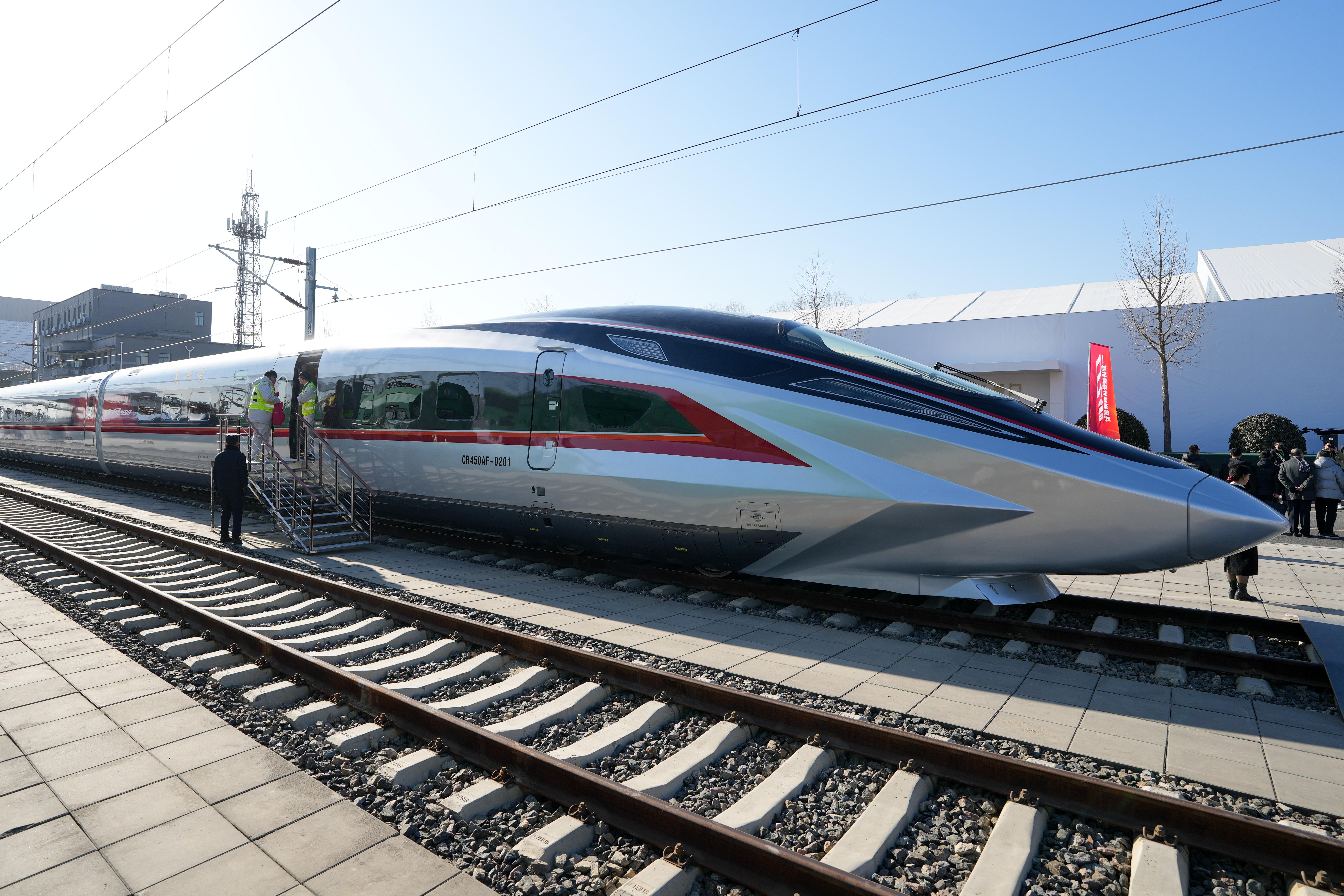
On the technology front, China's high-speed railway will continue to set global trends. The eagerly awaited CR450 trainsets (the new generation of Fuxing high-speed trains) are expected to complete final design in 2026, with performance reaching world-leading levels to further enhance operational efficiency and safety. Critical technologies for 400 km/h high-speed rail infrastructure will also enter experimental verification stages.
In 2026, China will unveil a remarkable blueprint in technology. From the heights of the cosmos to the depths of life, from the computing power that propels the future to the railway network that connects the world, each advancement contributes Chinese wisdom to humanity's exploration of the unknown.
2026年值得期待的中国科技大事
2025年,是中国科技爆发的一年,从DeepSeek人工智能大模型震惊全世界,到宇树机器人、小鹏机器人惊艳科技圈;从时速450公里的CR450动车组样车成功试运行,到天问二号开启小行星探测之路。中国的科技进展在不断为人类拓展认知边界。
2026年,中国科技发展将有哪些亮点?我们梳理了中国在2026年最有可能实现的四个方面的突破。
航天:载人登月继续做准备
2026年,中国航天将继续探寻“星辰大海”。
在近地轨道,“太空之家”中国空间站将进入常态化运营的第七个年头。神舟二十三号和神舟二十四号乘组将接力奔赴天宫。特别值得关注的是,神舟二十三号乘组将进行一名航天员长达一年以上的长期驻留试验,这在中国航天史上尚属首次。
在奔向月球的征途上,中国计划发射嫦娥七号探测器,其核心任务之一是在月球南极着陆,开展环境与资源探测,特别是探寻水的存在。这将对未来人类在月球的生存和发展产生深远影响。同时,为载人登月研制的长征十号火箭和新一代载人飞船“梦舟”也在继续试验,如果成功,将为后续中国载人登月打下坚实基础。
人工智能:“智能体”进万家
2025年年初,中国人工智能通用大模型DeepSeek横空出世。2026年,中国人工智能产业预计将维持高速增长态势,发展重心将从单纯的模型构建转向更深层次的产业融合与应用落地。
预计2026年中国智能算力占总算力的比例有望突破35%,国产芯片将在部分场景实现规模化应用,软硬件协同生态逐步成型。
无论是“软智能体”还是“硬智能体”,都将迎来爆发。在软件层面,能够直接操作电脑、完成复杂任务的智能体将进入金融、医疗、教育等多个行业。在硬件层面,具备智能交互能力的机器人、AI智能耳机等终端产品将加速推广,开辟消费新赛道。IDC预测,到2026年,50%的中国500强数据团队将使用智能体实现数据准备和分析。
AI的应用,将反过来推动传统产业的全流程智能化重构。在制造业,智能工厂的数量和质量将进一步提升,带动生产效率持续增长。具身智能(Embodied AI)将突破虚拟边界,在仓储物流、商业服务等特定场景实现规模化落地,并与智能驾驶、XR等领域形成协同效应。
新能源:绿色能源装机超过2亿千瓦
2026年,中国的新能源供给比重将持续提升,构建新型能源体系成为核心目标。
预计2026年全年,中国将新增风电、太阳能发电装机2亿千瓦以上,风电光伏发电量在全社会用电量中的占比将持续上升。
“AI+能源”融合,储能产业将从“配角”变为“主角”。人工智能算力中心的建设热潮将为储能行业带来全新的增长极。数据中心对电力质量、供应连续性和并网速度要求极高,储能系统将成为其快速上线和稳定运行的“战略基础设施”。
解决了充电瓶颈,中国新能源汽车的渗透率将进一步提升,智能化与电动化的深度融合将为用户带来全新的出行体验。
高速铁路:拥抱400公里时速
2025年年末,随着广湛高铁等线路的开通,中国高铁通车总里程超过5万公里。
2026年,中国铁路部门计划投产新线2000公里以上。这将进一步加密中国的铁路网,特别是加强出疆入藏、沿边沿海沿江通道以及区域间的互联互通。到2030年,全国高铁营业里程预计达到6万公里左右。
在技术层面,中国高铁将继续引领世界潮流。备受关注的CR450动车组(复兴号新一代动车组)预计将于2026年完成设计定型,其技术性能将达到世界领先水平,进一步提升中国高铁的运营效率和安全性能。同时,时速400公里高速铁路基础设施关键技术成果将进入试验验证阶段。
2026年,中国科技的画卷正徐徐展开。从仰望星空到俯察生命,从驱动未来的算力到连接世界的路网,每一项科技进步都将为人类探索贡献出中国智慧。
记者丨赵鹏
翻译丨柯妃娟
审校丨肖凯欣
图片丨新华社
-
A Hidden Fair Worth Noting on Beijing Road, GuangzhouFrom now through January 11 (this Sunday), visitors can explore the cultural fair on the southern section of Beijing Road.2026-01-08 21:06:05
-
Watermelon King Records Million-Yuan Daily Sales as Leizhou's Watermelon Season Peaks!Recently, several watermelon-growing bases in Leizhou, Zhanjiang, have entered the peak harvest season.2026-01-08 21:06:05
-
 Rising Tides over the Fishing Village, Shimmering New Dreams | Lingnan TravelogueTides rise over Longma, a traditional fishing village, where shimmering waters weave a gentle Lingnan waterway.2026-01-08 21:06:05
 -
Poster丨2025 World Match Racing Tour Shenzhen • Bao'an Final Kicks Off in Thrilling Style2026-01-07 23:48:03